↖ Go back
CSDM Ecosystem
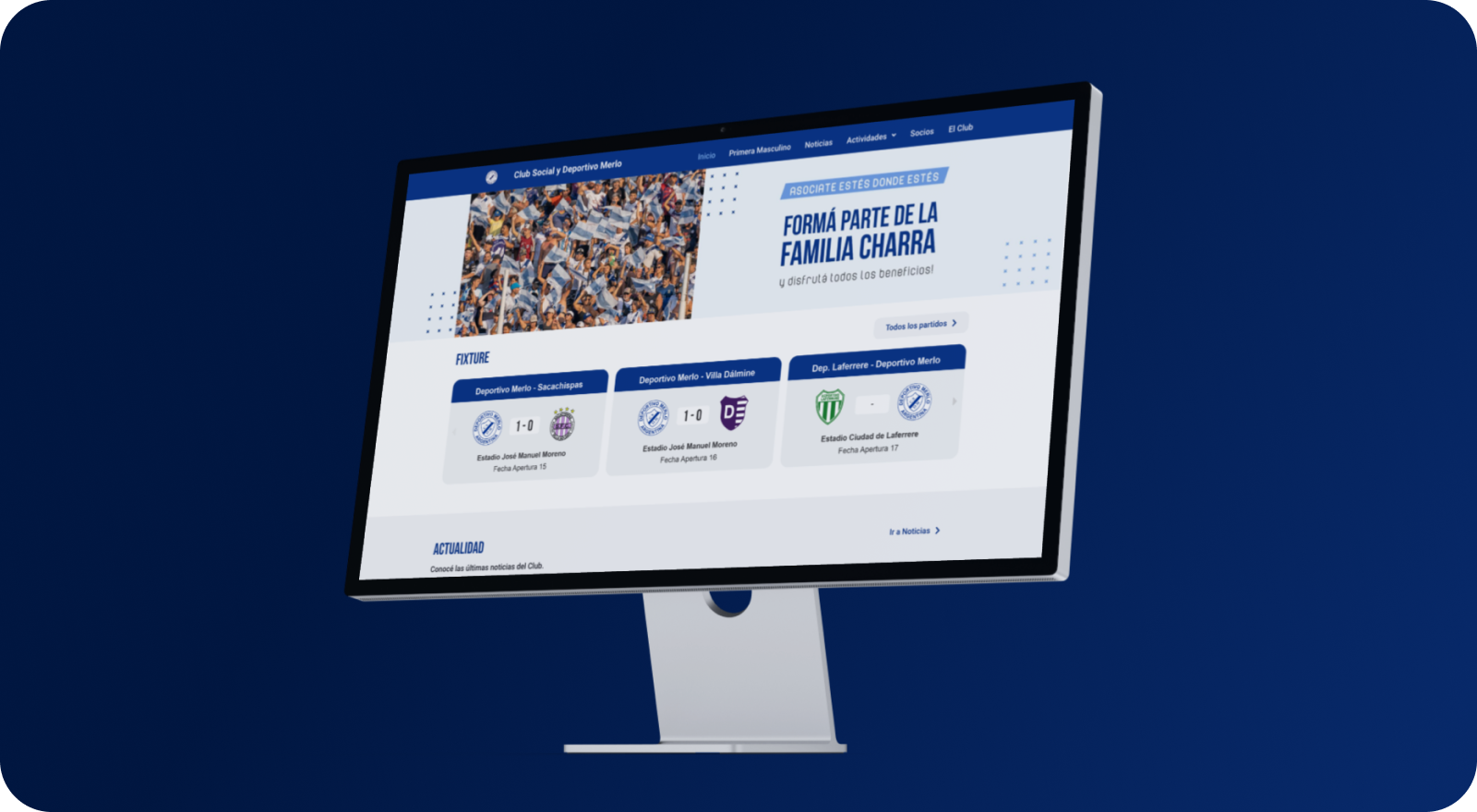
A SaaS ecosystem that digitizes how sports and social clubs run: member management, fees, traceability, and communication, with the foundation set for a modern member portal. I led the design and built it with AI.

A SaaS ecosystem that digitizes how sports and social clubs run: member management, fees, traceability, and communication, with the foundation set for a modern member portal. I led the design and built it with AI.
The challenge: Many clubs still run on Excel, notebooks, outdated systems, and manual work, which scatters information, causes admin errors, and makes member history hard to track.
The goal: One platform to centralize management, members, fees, traceability, and communication, while laying the base for a modern member portal.
Designing a full club ecosystem took me from designing specific solutions to designing systems.
The brief looked simple, replace a tangle of manual processes with one platform, but the real work was understanding a club as a whole operation: its processes, its rules, and the people behind each of them. That shift, from designing isolated screens to designing a system, shaped every decision that followed.
Before, member data lived across spreadsheets, notebooks, and disconnected tools, so information was scattered, errors crept in, and no one had a reliable history of a member. The goal was a single source of truth a club could actually run on, day to day.
Three principles kept the system focused as it grew:
With the principles set, I worked through the core flows the club touches every day, designing each to cut steps and surface the right information at the right moment.
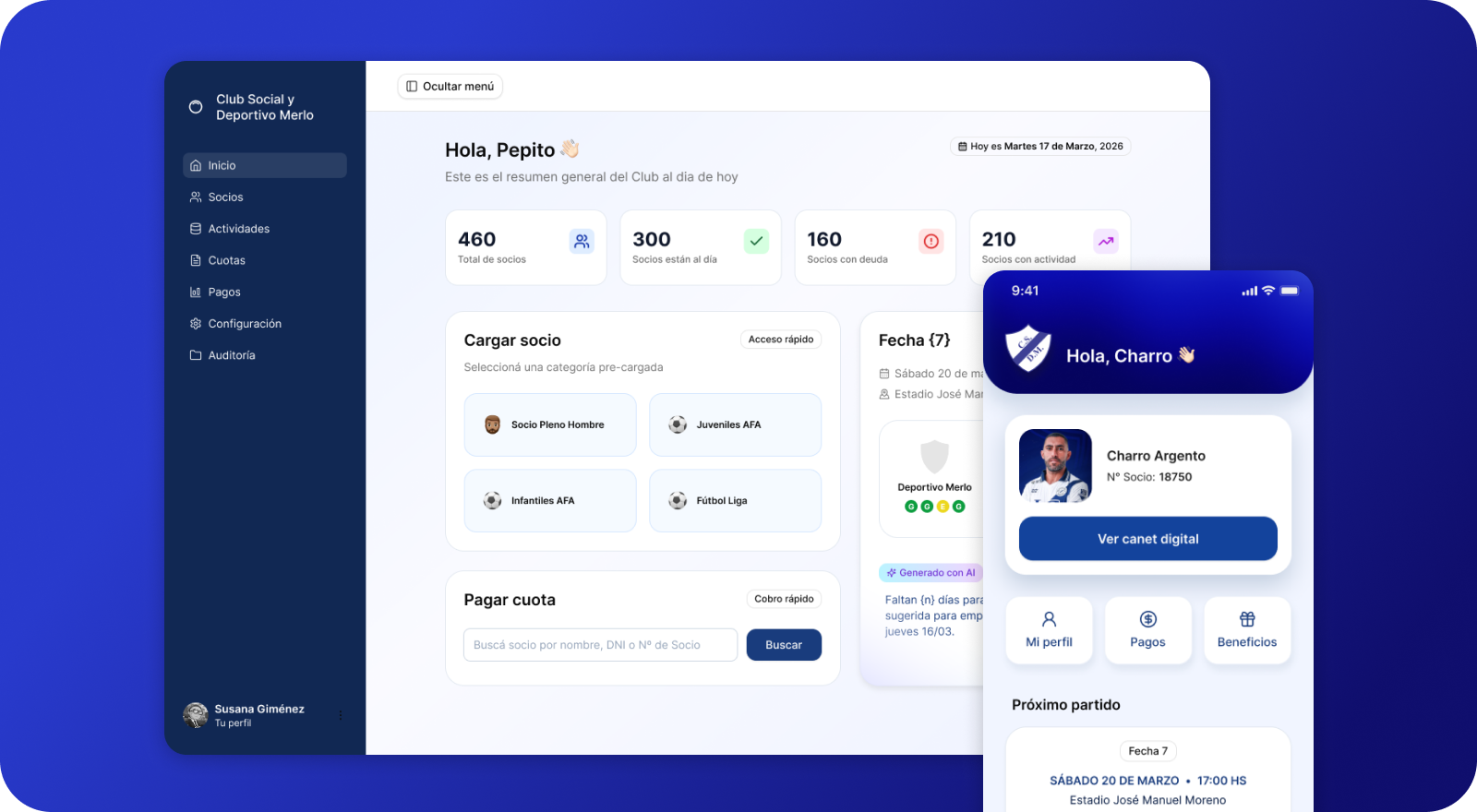
The first problem to crack was member data. I moved from scattered records across separate tools to a single member profile that holds status, fees, and history in one place, so finding or updating a member went from a hunt across systems to one predictable view.
A club isn't run by one kind of user, so access is shaped by role. Administrator, Treasury, Reception, and the Board each see what they need and nothing they don't, which keeps the interface clear and the data protected.
To stay consistent as the product grew, I built a design system covering colors, typography, components, tables, forms, and states. It made new features faster to design and kept the experience coherent across a product with a lot of surface area.

The system was shaped by the people who use it. I ran interviews with administrators, gathered continuous feedback, and tested in the real club rather than a lab, so decisions were grounded in how the work actually happens.
Working with AI didn't replace the design process. It let me spend more time understanding the problem, validating solutions, and making strategic decisions, while implementation ran and refined much faster.
Instead of treating AI as a single tool, I worked with it as a set of specialist agents. Agent Jona reviewed each new feature before it was built, weighing technical impact, dependencies, and future scalability. Claude Code generated the technical base of each solution.
Using specialist agents and AI-assisted development shortened the time between defining a need and shipping it, without losing quality or consistency.
The platform is in active daily use at an AFA club, run by five administrators with different permission levels, managing over 1,500 members from one centralized system.